Hormuz Is A Toll Bridge And The International Economy Pays $Billions Daily
– Managed Instability, Manipulation of International Economic Chokepoints, and the Political Economy of Endless Crisis
Full article on FB: https://www.facebook.com/share/p/18uKf4ve4N/
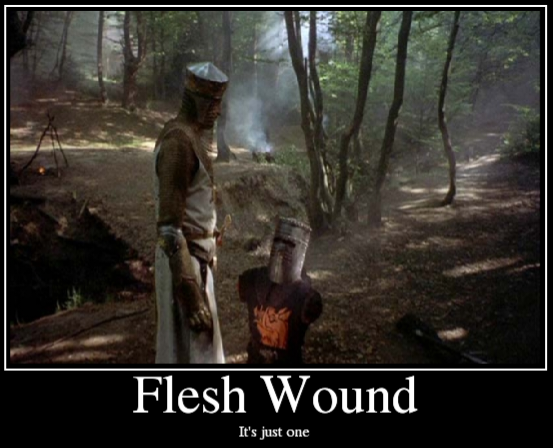
The famous scene in Monty Python and the Holy Grail in which a traveler knight approaches a bridge guarded by a stubborn knight and subsequently dismembers him demonstrates the wealth extraction of the current Strait of Hormuz scenario, such that the knight guarding the bridge represents the actual trade system of the international economy and the traveler knight represents the secret international wealth controllers, meaning the behind-the-scenes decisions, agreements, and alliances that extract wealth from the international economy using intrigue and subterfuge and the standard political military economic manipulation – this is the reality of the “Strait of Hormuz” scenario, 2026. One by one, the guard knight’s arms and legs are hacked away – demonstrating the daily fleecing of the international trade economy, yet the guard knight – the international trade economy, continues insisting that the fight goes on and the bridge remains under his authority. The international trade economy must continue the status quo or it ceases to exist and so do its profit mechanisms. But it is a no-win situation because those who control international policies, meaning the leaders of the governments in their supposed “international sovereignty,” dictate and manipulate the international trade system such that they can fleece it to their maximum ability at any moment.
One by one, the guard knight’s limbs are removed, yet he insists—quite proudly—that it is only a scratch. He is defeated, but not removed. Incapable, but still obstructing and remaining in existence so that the fleecers of the international economy can continue their wealth extraction from the limbless and hapless bridge guard that is the international economy and the fleecing continues to the amount of $billions per day.
The traveler does not conquer the guard of the international economy so much as step around him and carry on its daily fleecing.
Welcome to the Strait of Hormuz. Just imagine the helpless bridge guard as the international economy and limbless victim, and the traveler knight that turns the bridge guard (international trade economy) into a paraplegic as the secret alliances in manipulation of those who control the countries by policy decisions.
To the casual observer, the knight guarding the bridge is the obstacle.
But in the modern international economy, the knight guarding the bridge is not the power factor. The knight guarding the bridge represents the international commercial system itself composed of shipping firms, insurers, consumers, pension funds, manufacturers, and ordinary economies trying to keep trade moving through the Strait of Hormuz, and also theoretically guarding the rules and regulations of the ostensible international economic system and community. Every oil shock, every insurance spike, every military escalation removes another limb and costs the international economy $billions per day. Yet the system staggers forward, insisting everything remains stable because it has no alternative but to continue guarding the bridge and the status quo of the international economic market and system – as in placed by the manipulators and controllers of the governments and their system of political control originating from “international sovereignty,” meaning the absolute control of the market economy by the simple mechanism of policies and political decisions from official offices of power.
The traveler knight that dismembers the guard of the bridge and therefore the international economy, is not a single nation. It is the machinery of geopolitical power itself—states, financial interests, strategic institutions, and security systems that repeatedly cut into the commercial body while claiming to protect it. The bridge never closes and the guard of the bridge, meaning the international economy with all of its fleecing profit for the manipulators of international sovereignty, never dies. The toll never stops. And the knight, representing the system and structure of the international market economy and therefore facing daily dismemberment by merely continuing its pursuit of its sole purpose of existence which is international trade, is told this arrangement is necessary for his own security. So the hapless knight guarding the bridge, meaning the helpless protectors and administrators of the international economy, have no choice but to continue their losing predicament while the real power brokers at the higher level of international relations – meaning the arbiters of so-called “international sovereignty,” meaning those who control government policy and those who declare “war,” have unlimited leverage to cause such toll bridge situations using the Strait of Hormuz and thereby systematically dismember and fleece the international economy even though it has no option but to maintain its defense and its own dismemberment.
If one were to follow only the “mainstream” public narrative foisted upon the unsuspecting populace, the Strait is perpetually on the verge of catastrophe—held hostage by a regional power that could, at any moment, disrupt the arteries of global commerce. And yet, curiously, that catastrophe never quite arrives. Ships pass. Oil flows. Insurance premiums rise and fall like tides. The threat persists, but resolution does not.
Now, any ranch hand with a map and a modest sense of proportionality would ask a simple question: if the United States and its allies command the seas, the skies, and everything in between, why is the problem not solved? Certainly, the US military forces seized all the islands they wanted to in the South Pacific during World War II and that was against the Japanese military which was far more formidable than Iran will ever be. Let’s play some perspective on this: the US military is by far the most powerful on the Earth yet we are to believe that it cannot simply see the terrain controlling the Strait of Hormuz and as everywhere else in the Middle East to set up a perimeter and eventually McDonald’s and a PX and thereby control the situation just like Iraq and Afghanistan? Such as the current state of affairs in the Middle East, yet we are instructed and led to believe that the omniscient US military cannot seize a simple terrain feature. Such defies common sense and historical observation.
The answer is as impolite as it is consistent: because seizing the Strait and controlling the terrain feature ( a simple military operation) would destroy its usefulness.
THE TOLL BRIDGE NOBODY OWNS—BUT EVERYONE PAYS
The Strait of Hormuz is not merely a chokepoint. It is a mechanism – a toll bridge without a toll booth. Roughly 20% of global oil supply passes through it. That is not geography. That is leverage.
But unlike a traditional toll bridge, no single hand collects the fee. Instead, the toll is paid indirectly:
Through price spikes
Through insurance premiums
Through market volatility
Through military deployments justified year after year
The international economy thinks it is guarding the bridge and the existing structure of the international economy, and the system must continue literally behaving as if the ostensible wartime conditions exist, although in defending its own structure and trade agreements that depend on rulers of countries which are obviously tightly connected with larger International corporations and their profit, so in continuing its only possible path of reliance on the International System which is controlled by rulers of countries that are deeply intertwined with international corporation and profit the international market economy finds itself dismembered and fleeced of billions of profit per day by the Hormuz toll bridge scenario.
And here is the trick: the bridge must remain dangerous enough to justify the toll, but safe enough to remain open.
That is not chaos. That is calibration.
THE BLACK KNIGHT STRATEGY
Enter Iran—a state that, by conventional military metrics, cannot win a sustained war against the Western naval order, yet cannot be removed from the equation either.
Like the Black Knight, Iran will not “win.” The role of Iran is a modern example of a Roman Parthian random disruptor and is therefore on the side of the traveler knight who is engaged in dismembering the international economy and fleecing it for all it can:
Capable of harassment
Positioned at the chokepoint
Willing to escalate just enough – to keep the toll bridge scenario alive and active so the international media can sensationalize it and keep The Profit Stream open.
Missiles here, drones there, a seized tanker, a shadowed convoy – never enough to shut the gate, always enough to remind the traveler there is a gate.
And the great powers? They respond with shows of force, declarations, limited strikes, and then—like civilized gentlemen—they return to their seats while the play continues.
And the international media strokes the sensationalism as ordered to maintain the status quo.
One might call this incompetence, if incompetence had not proven so consistently profitable.
TIMELINE: THE PERSISTENT PROBLEM THAT NEVER RESOLVES
1953 — Western-backed intervention secures oil interests in Iran
1979 — Iranian Revolution removes alignment, introduces enduring adversary – establishment of Iran as a modern Parthian disruptor
1980s — Tanker War demonstrates vulnerability of Gulf shipping
2000s–2020s — Cycles of sanctions, proxy conflict, maritime harassment
Present (2026) — Status quo: persistent threat, uninterrupted flow, behind the scenes fleecing of the international economy in untold amounts by unseen forces
Notice the pattern:
Every escalation proves vulnerability.
Every de-escalation preserves the system.
METRICS OF A WELL-FUNCTIONING “PROBLEM”
~20 million barrels/day pass through Hormuz
~20% of international oil supply depends on the Strait remaining open
Even minor disruptions → $10–$30/barrel price swings
Continuous naval presence: multi-billion-dollar annual justification
Insurance and shipping risk premiums fluctuate with every incident
In any other field, a problem that generates this level of predictable output would be called a feature.
THE PARTHIAN FRONTIER – WITH A MODERN ACCOUNTING SYSTEM
Empires have always maintained a frontier adversary. Rome had Parthia—not defeated, not absorbed, but persistent. The frontier justified legions, taxation, and expansion. It created a permanent condition of “not quite peace.”
Today, the status of Iran as an international wild card serves the same function. The Strait of Hormuz is the current frontier line, and its instability is the justification engine.
The difference is modernity:
Where Rome extracted tribute in coin, the modern system extracts it in market movement.
CONCLUSION: THE SCRATCH THAT NEVER HEALS
The Black Knight, meaning the international economy that is leased to the amount of billions per day, loses his limbs but not his role. He remains in the story because the story requires him.
So too with Hormuz.
The world is not facing a problem it cannot solve. It is facing a system that the wealthy unseen powers seek to maintain because of their Unlimited profit engine. Yes, just as the so-called Great Depression of the economy of the USA in the early 1900s, ostensible international conflicts such as the Strait of Hormuz are deliberately created and orchestrated as precisely as one would calculate a mathematical equation. And all to maintain the secret fleecing of the massive worldwide economy by subterfuge and by manipulation of so-called “international sovereignty.”
Stability would end the toll. Decisive war would close the profit stream. And so we are left with the only acceptable outcome: a permanent inconvenience – profitable, manageable, and endlessly explained.
As Mark Twain might have put it:
It ain’t that the situation is confusing—it’s that the explanation is too tidy to be honest.
The bridge remains.
The toll is paid by the international economy to the amount of $billions per day.
And the hapless, limbless, clueless, and penniless guard of the bridge, the international economy which is subject to dismemberment by the manipulators of so-called international sovereignty, i.e., the “rulers of the countries”and mainly the “allies,” continues to lose billions per day to unseen and uncontrolled recipients, must continue guarding the bridge and the establishment of the international economy so as to merely survive.
While the traveler knights of the world secret government mafia continue their fleecing of the international economic community as much as they can, wherever they can – it just so happens that their current and most visible project is the Strait of Hormuz.
The true absurdity of the Hormuz system is that the global trade community resembles the Black Knight far more than the armored powers surrounding him. Tankers continue sailing. Markets continue pricing. Consumers continue paying. Each escalation strips away another layer of economic stability—higher fuel costs, inflation shocks, military expenditures, disrupted supply chains—yet the system limps forward declaring the arrangement sustainable because the Gilded rulers of the countries with their manipulation of international sovereignty will never provide a viable alternative because such would eliminate their profit structure.
And so the bridge remains open, though permanently dangerous, and the Unseen Powers behind the world governments and large corporations maintain their profit mechanism via the Untouchable and unsearchable mechanism created and defended by so-called international sovereignty, meaning the near absolute control that government administrators have over international economic “policies” such as shipping lanes and declarations of War.
The toll is paid not at a gatehouse, but through volatility itself. The modern commercial order is not destroyed in one dramatic collapse; it is slowly carved apart while continuing to insist that normalcy has been preserved.
As Mark Twain might have observed, the remarkable thing is not that people are fooled once—it is that systems can keep repeating the same injury for generations and still call it stability.
The knight loses another limb.
The bridge remains open.
The toll is collected again tomorrow.
All “politicians” and their government “administrators” are nothing but actors. START THERE
And the Earth is a motionless circular plane. It is time that we recognize the obvious, that the Earth does not move, that standing liquid does not curve – and 71% of the Earth is covered with standing liquid so 71% of the earth is as flat as the water in your bathtub and in your fish bowl and as flat as any lake, and it is as flat as the horizon on all beaches and oceans, and people do not live upside down in the supposed “southern hemisphere” and they do certainly do not live horizontally at the equator regions (as compared to those in the ostensible northern hemisphere”), and there simply cannot be an “infinite vacuum of space” when we on earth have 14 PSI to breathe. BTW, no “rockets” ever have personnel on them and the seven astronauts who supposedly died while riding the space shuttle Challenger in 1986 miraculously all survived and went about their daily lives – at least one now teaching law at Yale University – and only one or two of them even change their name – only slightly. Nuclear bombs are a hoax. The “virus” is a hoax. Dinosaurs never existed and evolution is a hoax as much as DNA is a hoax – the Earth ‘s creation is only about 6,000 years old and this is proven by many factors including the lack of billions of years of salt accumulation in the ocean. Mandatory reading list: 1) The Creature from Jekyll Island by G Edward Griffin, 2) The Myth of German Villainy, 3) The Six Million: Fact Or Fiction, 4) Slavery was Not the Cause of The War between the States, 5) Mein Kampf (Henry Ford version only, because every other version is hopelessly and deliberately mistranslated). The “Mormons” have it right, meaning the Church of Jesus Christ of Latter-day Saints. Simply connecting the dots, meaning cross referencing the Holy Scripture, tells the tale.
Romans 8:16-17, Matthew 28:18, Philippians 2:6, 1 John 3:2, Luke 12:32, Isaiah 57:13, Revelation 1:6, Revelation 3:21, Revelation 21:7, Ephesians 4:13, Galatians 4:7, John 10:34, Psalms 82:6, Genesis 1:26 (there are women God Elohim).
1. Romans 8:17
All mankind are heirs of God and joint heirs with Christ
2. Matthew 28:18
Christ received all power in heaven and in earth
3. Philippians 2:5-6
5 Let this mind be in you, which was also in Christ Jesus:
6 Who, being in the form of God, thought it not robbery to be equal with God.
Christ is equal with God the Elohim Father.
4. 1 John 3:2 we know that, when he shall appear, we shall be like him;
5. Ephesians 4:13
The end state of man is potentially the fullness of Christ, which is all power in heaven (above the firmament raqia dome, the kingdom of the Elohim) and in earth.
6. Luke 12:32
The father Elohim gives us his kingdom.
7. Revelation 3:21
Jesus gives to mankind to sit with him on his throne as Jesus has already sat down with the father on his throne.
This is a restatement of Romans 8:17 that all mankind are sons and daughters of the Most High Elohim and heirs of the Most High Elohim and joint heirs with Jesus the living son of the living man Most High Elohim, who received all power in the Kingdom of the Elohim (“heaven”) and in the Earth.
Therefore, all mankind can become equal with the Most High Elohim Creator because that is how the most high Elohim became Elohim by first living upon an earth and following the principles of his Holy Creator Most High Elohim.
“Heirs of God and joint heirs with Christ.” “Equal with God.” “We shall be like him.” WORD FOR WORD.
Jesus Christ Flat Earth
Hormuz Es Un Puente De Peaje Y La Economía Internacional Paga Miles De Millones De Dólares Diariamente
— Inestabilidad Gestionada, Manipulación de los Puntos Estratégicos de Estrangulamiento Económico Internacional y la Economía Política de la Crisis Permanente
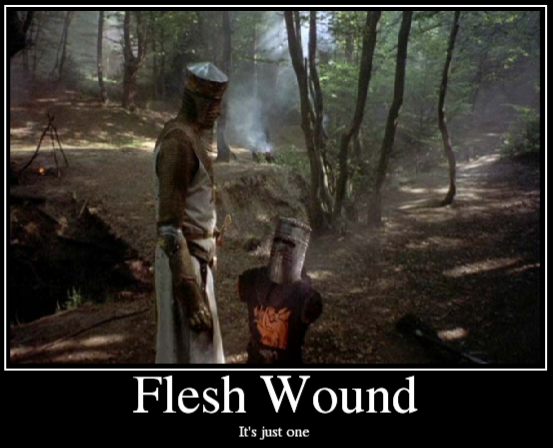
La famosa escena de *Monty Python and the Holy Grail*, en la que un caballero viajero se aproxima a un puente custodiado por un caballero obstinado —para posteriormente desmembrarlo—, ilustra la extracción de riqueza que caracteriza el escenario actual del estrecho de Ormuz. En esta analogía, el caballero que custodia el puente representa el sistema comercial real de la economía internacional, mientras que el caballero viajero encarna a los controladores secretos de la riqueza global: es decir, las decisiones, acuerdos y alianzas gestados entre bastidores que extraen riqueza de la economía internacional mediante la intriga, el subterfugio y la habitual manipulación política, militar y económica. Esta es la cruda realidad del escenario del «estrecho de Ormuz» en el año 2026. Uno a uno, los brazos y las piernas del caballero guardián son cercenados —lo cual simboliza el despojo diario al que se somete a la economía del comercio internacional—; sin embargo, el caballero guardián —es decir, la propia economía comercial internacional— insiste obstinadamente en que la lucha continúa y que el puente permanece bajo su autoridad. La economía del comercio internacional se ve obligada a mantener el *statu quo*, pues de lo contrario dejaría de existir, y con ella, sus mecanismos de generación de beneficios. No obstante, se trata de una situación sin salida, dado que quienes controlan las políticas internacionales —es decir, los líderes gubernamentales, amparados en su supuesta «soberanía internacional»— dictan y manipulan el sistema comercial global de tal manera que pueden saquearlo hasta su máxima capacidad en cualquier momento.
Uno a uno, los miembros del caballero guardián son amputados; sin embargo, él insiste —con un orgullo rayano en lo absurdo— en que no es más que un rasguño. Ha sido derrotado, pero no apartado. Se encuentra incapacitado, pero aun así persiste en su labor de obstrucción y en su propia existencia, permitiendo así que los depredadores de la economía internacional continúen extrayendo riqueza de ese desdichado guardián del puente —ahora desmembrado— que es la economía global; un saqueo que prosigue a un ritmo de miles de billones de dólares diarios.
El viajero no tanto conquista al guardián de la economía internacional, sino que más bien lo rodea y prosigue con su expolio cotidiano.
Bienvenidos al estrecho de Ormuz. Imaginen al indefenso guardián del puente como la economía internacional —una víctima desmembrada—, y al caballero viajero —aquel que convierte al guardián del puente (la economía del comercio internacional) en un parapléjico— como las alianzas secretas que manipulan a quienes controlan los países mediante decisiones políticas.
Para el observador casual, el caballero que custodia el puente es el obstáculo.
Sin embargo, en la economía internacional moderna, el caballero que custodia el puente no es el factor de poder. El caballero que custodia el puente representa al propio sistema comercial internacional, compuesto por empresas navieras, aseguradoras, consumidores, fondos de pensiones, fabricantes y economías ordinarias que intentan mantener el flujo comercial a través del estrecho de Ormuz; un sistema que, teóricamente, también vela por las normas y regulaciones del ostensible sistema y comunidad económica internacional. Cada crisis petrolera, cada alza repentina en los seguros, cada escalada militar le arranca otra extremidad a la economía internacional, costándole miles de millones de dólares al día. Y, sin embargo, el sistema avanza tambaleándose, insistiendo en que todo permanece estable, pues no tiene otra alternativa que seguir custodiando el puente —y el *statu quo* del mercado y sistema económico internacional— tal como ha sido establecido por los manipuladores y controladores de los gobiernos, y por su sistema de control político que emana de la «soberanía internacional»; entendida esta como el control absoluto de la economía de mercado mediante el simple mecanismo de políticas y decisiones políticas emanadas de las oficinas oficiales del poder.
El caballero viajero que desmiembra al guardián del puente —y, por ende, a la economía internacional— no es una sola nación. Es la propia maquinaria del poder geopolítico: Estados, intereses financieros, instituciones estratégicas y sistemas de seguridad que, reiteradamente, cercenan el cuerpo comercial mientras afirman protegerlo. El puente nunca se cierra, y el guardián del puente —es decir, la economía internacional, con toda su lucrativa capacidad de expolio para los manipuladores de la soberanía internacional— nunca muere. El peaje nunca cesa. Y a este caballero —que representa el sistema y la estructura de la economía de mercado internacional y que, por tanto, se enfrenta a un desmembramiento diario por el mero hecho de persistir en su único propósito existencial: el comercio internacional— se le asegura que este arreglo es indispensable para su propia seguridad. Así pues, el desventurado caballero que custodia el puente —es decir, los desvalidos protectores y administradores de la economía internacional— no tiene más opción que perpetuar su situación de derrota, mientras que los verdaderos artífices del poder en las altas esferas de las relaciones internacionales —es decir, los árbitros de la llamada «soberanía internacional»; aquellos que controlan la política gubernamental y quienes declaran la «guerra»— poseen una influencia ilimitada para orquestar tales situaciones de «puente de peaje» utilizando el estrecho de Ormuz y, de este modo, desmembrar y expoliar sistemáticamente la economía internacional, aun cuando esta no tiene otra opción que mantener su propia defensa y, con ello, su propio desmembramiento.
Si uno se guiara únicamente por la narrativa pública «dominante» —aquella que se impone a una población desprevenida—, el estrecho se hallaría perpetuamente al borde de la catástrofe: rehén de una potencia regional que podría, en cualquier instante, interrumpir las arterias del comercio mundial. Y, sin embargo —curiosamente—, dicha catástrofe nunca llega a consumarse. Los barcos transitan. El petróleo fluye. Las primas de los seguros suben y bajan como las mareas. La amenaza persiste; la resolución, no.
Ahora bien, cualquier peón de rancho con un mapa y un modesto sentido de la proporcionalidad plantearía una pregunta sencilla: si Estados Unidos y sus aliados dominan los mares, los cielos y todo lo que hay entre ellos, ¿por qué no se ha resuelto el problema? Ciertamente, las fuerzas militares estadounidenses tomaron todas las islas que quisieron en el Pacífico Sur durante la Segunda Guerra Mundial, y eso fue frente al ejército japonés, que resultaba mucho más formidable de lo que Irán llegará a ser jamás. Pongamos esto en perspectiva: el ejército de EE. UU. es, con gran diferencia, el más poderoso de la Tierra; sin embargo, se pretende que creamos que no es capaz de simplemente reconocer el terreno que controla el estrecho de Ormuz —al igual que en cualquier otro lugar de Oriente Medio— para establecer un perímetro y, con el tiempo, instalar un McDonald’s y una tienda militar (PX), controlando así la situación tal como hizo en Irak y Afganistán. Tal es el estado actual de los asuntos en Oriente Medio; no obstante, se nos instruye y se nos induce a creer que el omnisciente ejército estadounidense es incapaz de tomar una simple característica del terreno. Semejante idea desafía tanto el sentido común como la observación histórica.
La respuesta es tan descortés como coherente: porque tomar el estrecho y controlar esa característica del terreno —una operación militar sencilla— destruiría su utilidad.
EL PUENTE DE PEAJE QUE NADIE POSEE, PERO QUE TODOS PAGAN
El estrecho de Ormuz no es meramente un punto de estrangulamiento. Es un mecanismo: un puente de peaje sin cabina de cobro. Aproximadamente el 20% del suministro mundial de petróleo transita a través de él. Eso no es geografía; es poder de negociación.
Pero, a diferencia de un puente de peaje tradicional, no es una sola mano la que recauda la tarifa. En su lugar, el peaje se paga de forma indirecta:
Mediante picos en los precios.
Mediante primas de seguros.
Mediante la volatilidad del mercado.
Mediante despliegues militares justificados año tras año.
La economía internacional cree estar custodiando el puente —y la estructura actual de dicha economía—; por ello, el sistema debe seguir comportándose, literalmente, como si existieran condiciones de guerra manifiestas. Sin embargo, al defender su propia estructura y los acuerdos comerciales —los cuales dependen de gobernantes de países que, evidentemente, mantienen estrechos vínculos con las grandes corporaciones internacionales y sus intereses lucrativos—, y al persistir en su único camino posible de dependencia respecto al Sistema Internacional —controlado por líderes nacionales profundamente entrelazados con el capital corporativo global—, la economía de mercado internacional termina desmembrada y despojada de miles de millones en beneficios diarios a causa de este escenario del «puente de peaje» de Ormuz.
Y aquí reside el truco: el puente debe seguir siendo lo suficientemente peligroso como para justificar el peaje, pero lo suficientemente seguro como para permanecer abierto.
Eso no es caos. Eso es calibración.
LA ESTRATEGIA DEL CABALLERO NEGRO
Entra en escena Irán: un Estado que, según las métricas militares convencionales, no puede ganar una guerra sostenida contra el orden naval occidental, pero que tampoco puede ser eliminado de la ecuación.
Al igual que el Caballero Negro, Irán no «ganará». El papel de Irán constituye un ejemplo moderno de un disruptor aleatorio al estilo de la Roma-Partia y, por ende, se sitúa del lado del caballero viajero, quien se dedica a desmembrar la economía internacional y a esquilmarla hasta el último céntimo:
Capaz de hostigar.
Posicionado en el punto de estrangulamiento.
Dispuesto a escalar la tensión lo justo y necesario para mantener vivo y activo el escenario del «peaje forzoso», de modo que los medios internacionales puedan sensacionalizarlo y mantener abierto el flujo de beneficios.
Misiles por aquí, drones por allá, un buque cisterna incautado, un convoy bajo vigilancia… nunca lo suficiente como para cerrar el paso, pero siempre lo suficiente como para recordarle al viajero que la puerta existe.
¿Y las grandes potencias? Responden con demostraciones de fuerza, declaraciones, ataques limitados y, acto seguido —como caballeros civilizados—, regresan a sus asientos mientras la obra continúa.
Y los medios internacionales alimentan el sensacionalismo, tal como se les ha ordenado, para mantener el *statu quo*.
Cabría calificar esto de incompetencia, si no fuera porque dicha incompetencia ha demostrado ser, de manera tan sistemática, sumamente rentable.
CRONOLOGÍA: EL PROBLEMA PERSISTENTE QUE NUNCA SE RESUELVE
1953 — Una intervención respaldada por Occidente asegura los intereses petroleros en Irán.
1979 — La Revolución iraní rompe la alineación e introduce a un adversario perdurable: el establecimiento de Irán como un moderno disruptor de estirpe parta.
Década de 1980 — La Guerra de los Petroleros pone de manifiesto la vulnerabilidad del transporte marítimo en el Golfo.
Décadas de 2000 a 2020 — Ciclos de sanciones, conflictos subsidiarios y acoso marítimo.
Actualidad (2026) — *Status quo*: amenaza persistente, flujo ininterrumpido y un despojo de la economía internacional —perpetrado entre bastidores y por fuerzas invisibles— que asciende a sumas incalculables.
Observe el patrón:
Toda escalada demuestra vulnerabilidad.
Toda desescalada preserva el sistema.
MÉTRICAS DE UN «PROBLEMA» QUE FUNCIONA BIEN
~20 millones de barriles al día transitan por el estrecho de Ormuz.
~El 20 % del suministro mundial de petróleo depende de que el estrecho permanezca abierto.
Incluso las interrupciones menores provocan oscilaciones de precios de entre 10 y 30 dólares por barril.
La presencia naval continua encuentra su justificación anual en cifras multimillonarias.
Las primas de riesgo de seguros y transporte marítimo fluctúan con cada incidente.
En cualquier otro ámbito, un problema que genera este nivel de resultados predecibles sería calificado como una «funcionalidad».
LA FRONTERA PARTA, PERO CON UN SISTEMA CONTABLE MODERNO
Los imperios siempre han mantenido un adversario fronterizo. Roma tuvo a Partia: ni derrotada, ni absorbida, sino persistente. Dicha frontera justificaba las legiones, la recaudación de impuestos y la expansión. Creaba una condición permanente de «paz a medias».
Hoy en día, la condición de Irán como «comodín» en el escenario internacional cumple la misma función. El estrecho de Ormuz constituye la actual línea fronteriza, y su inestabilidad es el motor que genera dicha justificación.
La diferencia radica en la modernidad:
Mientras que Roma extraía tributos en moneda, el sistema moderno los extrae a través de los movimientos del mercado.
CONCLUSIÓN: EL RASGUÑO QUE NUNCA CICATRIZA
El Caballero Negro —es decir, la economía internacional, arrendada por un valor de miles de millones al día— pierde sus miembros, pero no su función. Permanece en la historia porque la historia lo exige.
Lo mismo ocurre con Ormuz.
El mundo no se enfrenta a un problema que no pueda resolver; se enfrenta a un sistema que las acaudaladas potencias invisibles buscan preservar, dado que constituye su motor de beneficios ilimitados. Sí, al igual que sucedió con la llamada Gran Depresión de la economía estadounidense a principios del siglo XX, los conflictos internacionales aparentes —como el del estrecho de Ormuz— son creados y orquestados deliberadamente, con la misma precisión con la que se calcularía una ecuación matemática. Y todo ello con el fin de mantener el despojo secreto de la inmensa economía mundial, valiéndose del subterfugio y de la manipulación de la llamada «soberanía internacional».
La estabilidad pondría fin a este tributo. Una guerra decisiva clausuraría el flujo de beneficios. Y así, nos quedamos con el único desenlace aceptable: un inconveniente permanente; rentable, manejable e incesantemente justificado.
Como bien podría haber dicho Mark Twain:
No es que la situación sea confusa; es que la explicación es demasiado pulcra para ser honesta.
El puente permanece.
El peaje lo paga la economía internacional, por un monto de miles de millones de dólares al día.
Y el desdichado, mutilado, desorientado y desposeído guardián del puente —la economía internacional, sujeta a ser desmembrada por los manipuladores de la llamada soberanía internacional, es decir, los «gobernantes de los países» y, principalmente, los «aliados»— continúa perdiendo miles de millones diarios a manos de destinatarios invisibles e incontrolados; y, sin embargo, debe seguir custodiando el puente y la estructura de la economía internacional con el único fin de sobrevivir.
Mientras los caballeros viajeros de la mafia del gobierno mundial secreto prosiguen esquilmando a la comunidad económica internacional tanto como pueden y dondequiera que pueden, resulta que su proyecto actual —y el más visible de todos— es el estrecho de Ormuz.
El verdadero absurdo del sistema de Ormuz reside en que la comunidad comercial global se asemeja mucho más al Caballero Negro que a las potencias acorazadas que lo rodean. Los buques cisterna siguen navegando. Los mercados siguen fijando precios. Los consumidores siguen pagando. Cada escalada arranca una nueva capa de estabilidad económica —mayores costos de combustible, sacudidas inflacionarias, gastos militares, interrupciones en las cadenas de suministro—; y, sin embargo, el sistema avanza cojeando, declarando que el arreglo es sostenible, pues los gobernantes «dorados» de los países —con su manipulación de la soberanía internacional— jamás ofrecerán una alternativa viable, dado que ello aniquilaría su estructura de beneficios.
Y así, el puente permanece abierto —aunque permanentemente peligroso—, y los Poderes Invisibles que operan tras los gobiernos mundiales y las grandes corporaciones mantienen su mecanismo de lucro a través de ese dispositivo intocable e inescrutable, creado y defendido por la llamada soberanía internacional: es decir, el control casi absoluto que los administradores gubernamentales ejercen sobre las «políticas» económicas internacionales, tales como las rutas marítimas y las declaraciones de guerra.
El peaje no se paga en una caseta de cobro, sino a través de la volatilidad misma. El orden comercial moderno no se destruye mediante un único y dramático colapso, sino que se desmantela lentamente, pieza a pieza, mientras se insiste obstinadamente en que la normalidad se ha preservado.
Como habría observado Mark Twain, lo extraordinario no es que la gente sea engañada una vez, sino que los sistemas puedan seguir repitiendo el mismo daño durante generaciones y aun así llamarlo estabilidad.
El caballero pierde otro miembro.
El puente permanece abierto.
El peaje se cobra de nuevo mañana.
Todos los «políticos» y sus «administradores» gubernamentales no son más que actores. EMPIEZA POR AHÍ.
Y la Tierra es un plano circular e inmóvil. Ya es hora de que reconozcamos lo obvio: que la Tierra no se mueve, que el líquido en reposo no se curva —y dado que el 71% de la Tierra está cubierto por líquido en reposo, ese 71% es tan plano como el agua de tu bañera o de tu pecera, y tan plano como cualquier lago, y tan plano como el horizonte en todas las playas y océanos—; que las personas no viven cabeza abajo en el supuesto «hemisferio sur», y ciertamente no viven en posición horizontal en las regiones ecuatoriales (en comparación con quienes habitan en el ostensible «hemisferio norte»); y que, sencillamente, no puede existir un «vacío infinito en el espacio» cuando nosotros, aquí en la Tierra, disponemos de 14 PSI de presión atmosférica para respirar. Por cierto, ningún «cohete» ha llevado jamás tripulación a bordo; y los siete astronautas que supuestamente fallecieron a bordo del transbordador espacial Challenger en 1986 sobrevivieron todos milagrosamente y continuaron con sus vidas cotidianas —al menos uno de ellos enseña ahora Derecho en la Universidad de Yale—; de hecho, solo uno o dos de ellos se cambiaron el nombre, y apenas de forma leve. Las bombas nucleares son un engaño. El «virus» es un engaño. Los dinosaurios nunca existieron, y la evolución es un engaño, tanto como lo es el ADN; la creación de la Tierra data de hace tan solo unos 6.000 años, hecho que se demuestra mediante numerosos factores, incluida la ausencia de una acumulación de sal en los océanos que abarque miles de millones de años. Lista de lecturas obligatorias: 1) *The Creature from Jekyll Island*, de G. Edward Griffin; 2) *The Myth of German Villainy*; 3) *The Six Million: Fact Or Fiction*; 4) *Slavery was Not the Cause of The War between the States*; 5) *Mein Kampf* (únicamente la versión de Henry Ford, pues cualquier otra versión ha sido traducida de manera deliberada e irremediablemente errónea). Los «mormones» tienen razón —refiriéndome aquí a la Iglesia de Jesucristo de los Santos de los Últimos Días—. Basta con «unir los puntos» —es decir, cotejar la información con las Sagradas Escrituras— para que la verdad salga a la luz.
Romanos 8:16-17, Mateo 28:18, Filipenses 2:6, 1 Juan 3:2, Lucas 12:32, Isaías 57:13, Apocalipsis 1:6, Apocalipsis 3:21, Apocalipsis 21:7, Efesios 4:13, Gálatas 4:7, Juan 10:34, Salmos 82:6, Génesis 1:26 (hay mujeres Dios Elohim).
1. Romanos 8:17
Toda la humanidad es heredera de Dios y coheredera con Cristo.
2. Mateo 28:18
Cristo recibió todo poder en el cielo y en la tierra.
3. Filipenses 2:5-6
5 Haya, pues, en vosotros este sentir que hubo también en Cristo Jesús:
6 El cual, siendo en forma de Dios, no estimó el ser igual a Dios como cosa a que aferrarse.
Cristo es igual a Dios, el Padre Elohim.
4. 1 Juan 3:2: sabemos que, cuando él aparezca, seremos semejantes a él;
5. Efesios 4:13
El estado final del hombre es, potencialmente, la plenitud de Cristo; la cual consiste en todo poder en el cielo (por encima del firmamento o bóveda *raqia*, el reino de los Elohim) y en la tierra.
6. Lucas 12:32
El Padre Elohim nos da su reino.
7. Apocalipsis 3:21
Jesús concede a la humanidad sentarse con él en su trono, tal como Jesús ya se ha sentado con el Padre en su trono.
Esta es una reafirmación de Romanos 8:17: que toda la humanidad es hija e hijo del Altísimo Elohim, heredera del Altísimo Elohim y coheredera con Jesús —el Hijo viviente del Hombre viviente, el Altísimo Elohim—, quien recibió todo poder en el Reino de los Elohim («el cielo») y en la Tierra.
Por lo tanto, toda la humanidad puede llegar a ser igual al Altísimo Elohim Creador, pues así es como el Altísimo Elohim llegó a ser Elohim: viviendo primero sobre una tierra y siguiendo los principios de su Santo Creador, el Altísimo Elohim.
«Herederos de Dios y coherederos con Cristo». «Igual a Dios». «Seremos semejantes a Él». PALABRA POR PALABRA.
Jesucristo y la Tierra Plana
www.jesuschristflatearth.com
www.bibleflatearth.com